Buy euro-shopper.be ?
We are moving the project
euro-shopper.be .
Are you interested in purchasing the domain
euro-shopper.be ?
domain@kv-gmbh.de · 0541-91531010
Buy euro-shopper.be ?
What are math coefficients?
Math coefficients are the numerical factors that are multiplied by variables in algebraic expressions or equations. They represent the scale or magnitude of the variable in the expression. For example, in the expression 3x + 5, the coefficient of x is 3. Coefficients are important in understanding the behavior and relationships between variables in mathematical equations and expressions. **
What are coefficients in chemistry?
In chemistry, coefficients are the numbers placed in front of chemical formulas in a balanced chemical equation. These coefficients represent the ratio of moles of each substance involved in the reaction. Coefficients are used to balance chemical equations by ensuring that the number of atoms of each element is the same on both sides of the equation. They help in determining the stoichiometry of a reaction, which is the quantitative relationship between reactants and products in a chemical reaction. **


Similar search terms for Coefficients
Top-Angebote
Products related to Coefficients:
-
BabyOno Straws Cleaning Brushes brosse 3 pcsBabyOno Straws Cleaning Brushes, 3 pcs, Lavage des biberons et des tétines pour enfant, Un nettoyage vraiment minutieux des biberons et des tétines est presque impossible sans accessoires spéciaux. Le produit BabyOno Straws Cleaning Brushes deviendra rapidement une aide précieuse au quotidien. Le produit : permet de nettoyer en profondeur même les endroits difficiles à atteindre dans le biberon, en toute sécurité1,62 €*Shipping: 3,45 €Secure redirect to the provider
-
Elmex Intensive Cleaning TRIO ensemble pour les dentsElmex Intensive Cleaning TRIO, 3x75 ml, Pour une protection complète pour femme, Découvrez un coffret pratique de produits qui embelliront votre quotidien. Le coffret Elmex Intensive Cleaning TRIO facilite votre choix, en proposant une sélection de vos articles préférés, désormais réunis dans un seul et même emballage. L'ensemble contient: Elmex Caries Plus Intensive Cleaning dentifrice blanchissant soin complet 3x50 ml Le produit : nettoie parfaitement les dents lutte contre la carie dentaire et le tartre dentaire blanchit les dents n’abîme pas les dents garantit le respect de l’émail dentaire Mode d’emploi : Utilisez au moins 2 fois par jour. Nettoyez vos dents minutieusement pendant au moins 2 minutes.17,50 €*Shipping: 3,45 €Secure redirect to the provider
-
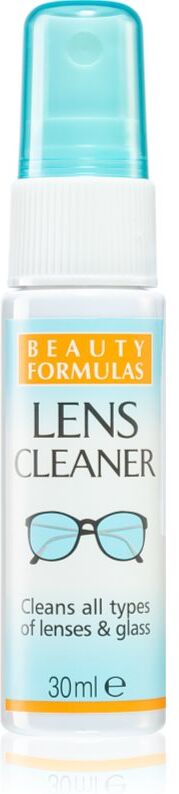
Beauty Formulas Lens Cleaning Spray nettoyant 30 mlBeauty Formulas Lens Cleaning, 30 ml, Accessoires mixte, Protégez votre peau du vieillissement prématuré et des autres dégradations causées par le soleil. La peau délicate du visage est beaucoup plus sensible que celle du reste du corps. En outre, elle est exposée aux rayons du soleil toute l'année. C'est pourquoi il est important de ne pas sous-estimer sa protection. Le produit de bronzage Beauty Formulas Lens Cleaning protège efficacement la peau de votre visage contre les rayons UV et vous aide ainsi à prévenir les coups de soleil ou l'apparition de taches pigmentaires et à diminuer l'élasticité de la peau, la perte de collagène et autres signes de l’âge. Mode d’emploi : Utilisez conformément aux instructions jointes.2,88 €*Shipping: 3,45 €Secure redirect to the provider
-
MAM Cleaning Brush brosse de nettoyage 1 pcsMAM Cleaning Brush, 1 pcs, Lavage des biberons et des tétines pour enfant, Un nettoyage vraiment minutieux des biberons et des tétines est presque impossible sans accessoires spéciaux. Le produit MAM Cleaning Brush deviendra rapidement une aide précieuse au quotidien. Le produit : brosse spécialement conçue pour nettoyer les biberons atteint tous les coins et courbes des biberons permet de nettoyer en profondeur même les endroits difficiles à atteindre dans le biberon, en toute sécurité Mode d’emploi : Après avoir nettoyé la tétine, assurez-vous toujours que vous ne l’ayez pas endommagée. N’oubliez pas de nettoyer les biberons et les tétines immédiatement après avoir nourri votre bébé.6,94 €*Shipping: 3,45 €Secure redirect to the provider



-
How are extinction coefficients calculated?
Extinction coefficients are calculated by measuring the absorbance of a substance at a specific wavelength using a spectrophotometer. The absorbance value is then used in the Beer-Lambert law equation, A = εlc, where A is the absorbance, ε is the extinction coefficient, l is the path length of the sample, and c is the concentration of the substance. By rearranging the equation, the extinction coefficient (ε) can be calculated by dividing the absorbance (A) by the product of the path length (l) and concentration (c) of the substance. **
-
How do I determine the coefficients?
To determine the coefficients in a mathematical equation, you can use various methods depending on the type of equation. For linear equations, you can use the method of substitution or elimination to solve for the coefficients. For quadratic equations, you can use the method of completing the square or the quadratic formula to find the coefficients. In general, you can also use regression analysis or curve fitting techniques to determine the coefficients in a more complex equation. **
-
How do you determine the coefficients?
The coefficients in a mathematical equation are determined through a process called regression analysis. This involves using statistical techniques to find the best-fitting line or curve that represents the relationship between the variables in the equation. The coefficients are then calculated based on the data points and the specific regression model being used, such as linear regression or polynomial regression. The goal is to find the coefficients that minimize the difference between the predicted values from the model and the actual observed values in the data. **
-
How do you calculate the extinction coefficients?
The extinction coefficient, also known as molar absorptivity, is calculated using the Beer-Lambert law, which relates the absorbance of a substance to its concentration and the path length of the sample. The formula for calculating the extinction coefficient is ε = A / (c * l), where ε is the extinction coefficient, A is the absorbance, c is the concentration, and l is the path length. By measuring the absorbance of a known concentration of the substance at a specific path length, the extinction coefficient can be determined. This value is important for quantifying the concentration of a substance in a solution using spectrophotometry. **


What is the problem with the coefficients?
The problem with the coefficients is that they can be sensitive to the scale of the input variables. This means that if the input variables are on different scales, the coefficients may not accurately represent the true relationship between the variables and the target. Additionally, coefficients can be difficult to interpret when the input variables are not standardized, making it challenging to compare the impact of different variables on the target. Standardizing the input variables can help address these issues by putting them on the same scale and making the coefficients more interpretable and comparable. **
How do you get to the coefficients here?
To get the coefficients in a linear regression model, we use a method called ordinary least squares (OLS). This method minimizes the sum of the squared differences between the observed values and the values predicted by the model. By minimizing this sum, we can find the coefficients that best fit the data. The coefficients represent the relationship between the independent variables and the dependent variable in the model. **
Top-Angebote
Products related to Coefficients:
-
Ardell False Eyelash Cleaning Kit ensemble cilsArdell False Eyelash Cleaning Kit, 2 pcs, Coffrets beauté pour femme, L'ensemble contient: Nettoyant pour faux cils 7,5 ml Accessoire de nettoyage pour faux cils 1 pcs Le produit : coffret à un prix avantageux conception de qualité Mode d’emploi : Utilisez chaque produit contenu dans le coffret cosmétique en respectant les instructions fournies dans le mode d’emploi.10,90 €*Shipping: 3,45 €Secure redirect to the provider
-
BabyOno Straws Cleaning Brushes brosse 3 pcsBabyOno Straws Cleaning Brushes, 3 pcs, Lavage des biberons et des tétines pour enfant, Un nettoyage vraiment minutieux des biberons et des tétines est presque impossible sans accessoires spéciaux. Le produit BabyOno Straws Cleaning Brushes deviendra rapidement une aide précieuse au quotidien. Le produit : permet de nettoyer en profondeur même les endroits difficiles à atteindre dans le biberon, en toute sécurité1,62 €*Shipping: 3,45 €Secure redirect to the provider
-
Elmex Intensive Cleaning TRIO ensemble pour les dentsElmex Intensive Cleaning TRIO, 3x75 ml, Pour une protection complète pour femme, Découvrez un coffret pratique de produits qui embelliront votre quotidien. Le coffret Elmex Intensive Cleaning TRIO facilite votre choix, en proposant une sélection de vos articles préférés, désormais réunis dans un seul et même emballage. L'ensemble contient: Elmex Caries Plus Intensive Cleaning dentifrice blanchissant soin complet 3x50 ml Le produit : nettoie parfaitement les dents lutte contre la carie dentaire et le tartre dentaire blanchit les dents n’abîme pas les dents garantit le respect de l’émail dentaire Mode d’emploi : Utilisez au moins 2 fois par jour. Nettoyez vos dents minutieusement pendant au moins 2 minutes.17,50 €*Shipping: 3,45 €Secure redirect to the provider
-
What are math coefficients?
Math coefficients are the numerical factors that are multiplied by variables in algebraic expressions or equations. They represent the scale or magnitude of the variable in the expression. For example, in the expression 3x + 5, the coefficient of x is 3. Coefficients are important in understanding the behavior and relationships between variables in mathematical equations and expressions. **
-
What are coefficients in chemistry?
In chemistry, coefficients are the numbers placed in front of chemical formulas in a balanced chemical equation. These coefficients represent the ratio of moles of each substance involved in the reaction. Coefficients are used to balance chemical equations by ensuring that the number of atoms of each element is the same on both sides of the equation. They help in determining the stoichiometry of a reaction, which is the quantitative relationship between reactants and products in a chemical reaction. **
-
How are extinction coefficients calculated?
Extinction coefficients are calculated by measuring the absorbance of a substance at a specific wavelength using a spectrophotometer. The absorbance value is then used in the Beer-Lambert law equation, A = εlc, where A is the absorbance, ε is the extinction coefficient, l is the path length of the sample, and c is the concentration of the substance. By rearranging the equation, the extinction coefficient (ε) can be calculated by dividing the absorbance (A) by the product of the path length (l) and concentration (c) of the substance. **
-
How do I determine the coefficients?
To determine the coefficients in a mathematical equation, you can use various methods depending on the type of equation. For linear equations, you can use the method of substitution or elimination to solve for the coefficients. For quadratic equations, you can use the method of completing the square or the quadratic formula to find the coefficients. In general, you can also use regression analysis or curve fitting techniques to determine the coefficients in a more complex equation. **
Similar search terms for Coefficients
-
Beauty Formulas Lens Cleaning Spray nettoyant 30 mlBeauty Formulas Lens Cleaning, 30 ml, Accessoires mixte, Protégez votre peau du vieillissement prématuré et des autres dégradations causées par le soleil. La peau délicate du visage est beaucoup plus sensible que celle du reste du corps. En outre, elle est exposée aux rayons du soleil toute l'année. C'est pourquoi il est important de ne pas sous-estimer sa protection. Le produit de bronzage Beauty Formulas Lens Cleaning protège efficacement la peau de votre visage contre les rayons UV et vous aide ainsi à prévenir les coups de soleil ou l'apparition de taches pigmentaires et à diminuer l'élasticité de la peau, la perte de collagène et autres signes de l’âge. Mode d’emploi : Utilisez conformément aux instructions jointes.2,88 €*Shipping: 3,45 €Secure redirect to the provider
-
MAM Cleaning Brush brosse de nettoyage 1 pcsMAM Cleaning Brush, 1 pcs, Lavage des biberons et des tétines pour enfant, Un nettoyage vraiment minutieux des biberons et des tétines est presque impossible sans accessoires spéciaux. Le produit MAM Cleaning Brush deviendra rapidement une aide précieuse au quotidien. Le produit : brosse spécialement conçue pour nettoyer les biberons atteint tous les coins et courbes des biberons permet de nettoyer en profondeur même les endroits difficiles à atteindre dans le biberon, en toute sécurité Mode d’emploi : Après avoir nettoyé la tétine, assurez-vous toujours que vous ne l’ayez pas endommagée. N’oubliez pas de nettoyer les biberons et les tétines immédiatement après avoir nourri votre bébé.6,94 €*Shipping: 3,45 €Secure redirect to the provider
-
Beauty Formulas Lens Cleaning lingettes nettoyantes pour lunettes 20 pcsBeauty Formulas Lens Cleaning, 20 pcs, Accessoires pour femme, Protégez votre peau du vieillissement prématuré et des autres dégradations causées par le soleil. La peau délicate du visage est beaucoup plus sensible que celle du reste du corps. En outre, elle est exposée aux rayons du soleil toute l'année. C'est pourquoi il est important de ne pas sous-estimer sa protection. Le produit de bronzage Beauty Formulas Lens Cleaning protège efficacement la peau de votre visage contre les rayons UV et vous aide ainsi à prévenir les coups de soleil ou l'apparition de taches pigmentaires et à diminuer l'élasticité de la peau, la perte de collagène et autres signes de l’âge. Mode d’emploi : Utilisez conformément aux instructions jointes.2,25 €*Shipping: 3,45 €Secure redirect to the provider
-
How do you determine the coefficients?
The coefficients in a mathematical equation are determined through a process called regression analysis. This involves using statistical techniques to find the best-fitting line or curve that represents the relationship between the variables in the equation. The coefficients are then calculated based on the data points and the specific regression model being used, such as linear regression or polynomial regression. The goal is to find the coefficients that minimize the difference between the predicted values from the model and the actual observed values in the data. **
-
How do you calculate the extinction coefficients?
The extinction coefficient, also known as molar absorptivity, is calculated using the Beer-Lambert law, which relates the absorbance of a substance to its concentration and the path length of the sample. The formula for calculating the extinction coefficient is ε = A / (c * l), where ε is the extinction coefficient, A is the absorbance, c is the concentration, and l is the path length. By measuring the absorbance of a known concentration of the substance at a specific path length, the extinction coefficient can be determined. This value is important for quantifying the concentration of a substance in a solution using spectrophotometry. **
-
What is the problem with the coefficients?
The problem with the coefficients is that they can be sensitive to the scale of the input variables. This means that if the input variables are on different scales, the coefficients may not accurately represent the true relationship between the variables and the target. Additionally, coefficients can be difficult to interpret when the input variables are not standardized, making it challenging to compare the impact of different variables on the target. Standardizing the input variables can help address these issues by putting them on the same scale and making the coefficients more interpretable and comparable. **
-
How do you get to the coefficients here?
To get the coefficients in a linear regression model, we use a method called ordinary least squares (OLS). This method minimizes the sum of the squared differences between the observed values and the values predicted by the model. By minimizing this sum, we can find the coefficients that best fit the data. The coefficients represent the relationship between the independent variables and the dependent variable in the model. **
* All prices are inclusive of VAT and, if applicable, plus shipping costs. The offer information is based on the details provided by the respective shop and is updated through automated processes. Real-time updates do not occur, so deviations can occur in individual cases. ** Note: Parts of this content were created by AI.