Buy euro-shopper.be ?
We are moving the project
euro-shopper.be .
Are you interested in purchasing the domain
euro-shopper.be ?
domain@kv-gmbh.de · 0541-91531010
Buy euro-shopper.be ?
Why is Rutherford's scattering experiment called a scattering experiment at all?
Rutherford's experiment is called a scattering experiment because it involved firing alpha particles at a thin gold foil and observing how they scattered after hitting the foil. The term "scattering" refers to the process of particles being deflected from their original path as a result of collisions with the atoms in the foil. By analyzing the pattern of scattering, Rutherford was able to deduce the structure of the atom and propose the existence of a dense, positively charged nucleus at its center. This experiment was crucial in advancing our understanding of atomic structure and the behavior of subatomic particles. **
What was Rutherford's scattering experiment?
Rutherford's scattering experiment involved firing alpha particles at a thin gold foil and observing their deflection. The experiment aimed to study the structure of the atom and determine how the positive charge is distributed within it. The unexpected results of the experiment led Rutherford to propose the nuclear model of the atom, where he suggested that atoms have a small, dense, positively charged nucleus at their center. This experiment was crucial in advancing our understanding of atomic structure. **


Similar search terms for Scattering
Top-Angebote
Products related to Scattering:
-
TIMBERLAND Baskets en cuir, EURO GRID MID LACEDétails produit • Usage sportswear • Talon plat • Fermeture : A lacets Composition et Entretien • Dessus/Tige : 100% cuir • Doublure : 100% synthétique • Semelle intérieure : 100% synthétique • Semelle extérieure : 100% caoutchouc130,00 €*Shipping: 3,99 €Secure redirect to the provider
-
BabyOno Straws Cleaning Brushes brosse 3 pcsBabyOno Straws Cleaning Brushes, 3 pcs, Lavage des biberons et des tétines pour enfant, Un nettoyage vraiment minutieux des biberons et des tétines est presque impossible sans accessoires spéciaux. Le produit BabyOno Straws Cleaning Brushes deviendra rapidement une aide précieuse au quotidien. Le produit : permet de nettoyer en profondeur même les endroits difficiles à atteindre dans le biberon, en toute sécurité1,62 €*Shipping: 3,45 €Secure redirect to the provider
-
Ardell False Eyelash Cleaning Kit ensemble cilsArdell False Eyelash Cleaning Kit, 2 pcs, Coffrets beauté pour femme, L'ensemble contient: Nettoyant pour faux cils 7,5 ml Accessoire de nettoyage pour faux cils 1 pcs Le produit : coffret à un prix avantageux conception de qualité Mode d’emploi : Utilisez chaque produit contenu dans le coffret cosmétique en respectant les instructions fournies dans le mode d’emploi.11,50 €*Shipping: 3,45 €Secure redirect to the provider




-
What is the Rutherford scattering experiment?
The Rutherford scattering experiment was conducted by physicist Ernest Rutherford in 1909. In this experiment, Rutherford bombarded a thin gold foil with alpha particles and observed their scattering patterns. The unexpected results of the experiment led to the discovery of the atomic nucleus and the development of the nuclear model of the atom. The experiment showed that most of the alpha particles passed through the foil, but some were deflected at large angles, indicating the presence of a small, dense nucleus within the atom. This experiment revolutionized our understanding of the structure of the atom. **
-
What is the Rutherford scattering with copper?
Rutherford scattering with copper refers to the experiment conducted by Ernest Rutherford in which he bombarded a thin gold foil with alpha particles. The experiment led to the discovery that atoms have a small, dense nucleus at their center, which was a groundbreaking finding in the field of nuclear physics. The use of copper in the experiment is not common, as gold was the metal foil typically used due to its malleability and ability to be made very thin. **
-
What is the difference between reflection and scattering?
Reflection occurs when light bounces off a surface at the same angle it hits it, resulting in a clear image. Scattering, on the other hand, occurs when light is dispersed in different directions by particles or irregularities in a medium, resulting in a diffuse or hazy appearance. In reflection, the light maintains its original intensity and color, while in scattering, the light may lose intensity and change color due to the interaction with the medium. **
-
What causes the photoelectric effect: absorption or scattering?
The photoelectric effect is caused by absorption of photons by electrons in a material, rather than scattering. When a photon with sufficient energy is absorbed by an electron in a material, it can transfer enough energy to the electron to liberate it from the material, causing the photoelectric effect. Scattering, on the other hand, involves the redirection of photons by particles in a material, but it does not result in the ejection of electrons from the material. **

Why is the Rutherford experiment called the scattering experiment?
The Rutherford experiment is called the scattering experiment because it involved firing alpha particles at a thin gold foil and observing how they scattered after hitting the foil. This scattering of alpha particles provided crucial evidence for the existence of a small, dense nucleus within the atom, as most of the alpha particles passed through the foil with little deflection, but a small fraction were scattered at large angles. This unexpected scattering pattern led to the development of the nuclear model of the atom and revolutionized our understanding of atomic structure. **
Can you explain the Rutherford scattering experiment atomic model?
The Rutherford scattering experiment was conducted by physicist Ernest Rutherford in 1909. In this experiment, Rutherford bombarded a thin gold foil with alpha particles and observed their scattering patterns. According to the prevailing atomic model at the time, the plum pudding model, it was expected that the alpha particles would pass through the foil with minimal deflection. However, Rutherford's observations showed that some alpha particles were deflected at large angles, and even some were reflected back. This led to the development of the nuclear model of the atom, in which the atom is mostly empty space with a small, dense nucleus at the center. This experiment provided evidence for the existence of a positively charged nucleus within the atom, leading to a significant shift in our understanding of atomic structure. **
Top-Angebote
Products related to Scattering:
-
TIMBERLAND Boots en cuir, Euro Sprint Mide LaceDétails produit • Talon plat • Fermeture : A lacets • Bout rond Composition et Entretien • Dessus/Tige : 100% cuir • Doublure : 100% synthétique • Semelle intérieure : 100% synthétique • Semelle extérieure : 100% caoutchouc160,00 €*Shipping: 3,99 €Secure redirect to the provider
-
TIMBERLAND Boots en cuir EURO SPRINT MIDE LACECes bottines robustes, qui ne laissent pas de traces au sol, permettent aux enfants de jouer toute la journée, à l’intérieur comme à l’extérieur. Elles sont fabriquées en cuir premium Timberland® leather, avec une doublure en tissu ReBOTL™ ainsi qu’une assise plantaire et une semelle intermédiaire en EVA pour amortir les pas de votre enfant. Détails produit • Talon plat • Hauteur de talon : 2 cm • Fermeture : A lacets • Bout rond • Finition velours, nubuck Composition et Entretien • Dessus/Tige : 100% nubuck • Doublure : 100% autres matériaux • Semelle intérieure : 100% eva • Semelle extérieure : 100% caoutchouc85,50 €*Shipping: 3,99 €Secure redirect to the provider
-
TIMBERLAND Baskets en cuir, EURO GRID MID LACEDétails produit • Usage sportswear • Talon plat • Fermeture : A lacets Composition et Entretien • Dessus/Tige : 100% cuir • Doublure : 100% synthétique • Semelle intérieure : 100% synthétique • Semelle extérieure : 100% caoutchouc130,00 €*Shipping: 3,99 €Secure redirect to the provider
-
Why is Rutherford's scattering experiment called a scattering experiment at all?
Rutherford's experiment is called a scattering experiment because it involved firing alpha particles at a thin gold foil and observing how they scattered after hitting the foil. The term "scattering" refers to the process of particles being deflected from their original path as a result of collisions with the atoms in the foil. By analyzing the pattern of scattering, Rutherford was able to deduce the structure of the atom and propose the existence of a dense, positively charged nucleus at its center. This experiment was crucial in advancing our understanding of atomic structure and the behavior of subatomic particles. **
-
What was Rutherford's scattering experiment?
Rutherford's scattering experiment involved firing alpha particles at a thin gold foil and observing their deflection. The experiment aimed to study the structure of the atom and determine how the positive charge is distributed within it. The unexpected results of the experiment led Rutherford to propose the nuclear model of the atom, where he suggested that atoms have a small, dense, positively charged nucleus at their center. This experiment was crucial in advancing our understanding of atomic structure. **
-
What is the Rutherford scattering experiment?
The Rutherford scattering experiment was conducted by physicist Ernest Rutherford in 1909. In this experiment, Rutherford bombarded a thin gold foil with alpha particles and observed their scattering patterns. The unexpected results of the experiment led to the discovery of the atomic nucleus and the development of the nuclear model of the atom. The experiment showed that most of the alpha particles passed through the foil, but some were deflected at large angles, indicating the presence of a small, dense nucleus within the atom. This experiment revolutionized our understanding of the structure of the atom. **
-
What is the Rutherford scattering with copper?
Rutherford scattering with copper refers to the experiment conducted by Ernest Rutherford in which he bombarded a thin gold foil with alpha particles. The experiment led to the discovery that atoms have a small, dense nucleus at their center, which was a groundbreaking finding in the field of nuclear physics. The use of copper in the experiment is not common, as gold was the metal foil typically used due to its malleability and ability to be made very thin. **
Similar search terms for Scattering
-
BabyOno Straws Cleaning Brushes brosse 3 pcsBabyOno Straws Cleaning Brushes, 3 pcs, Lavage des biberons et des tétines pour enfant, Un nettoyage vraiment minutieux des biberons et des tétines est presque impossible sans accessoires spéciaux. Le produit BabyOno Straws Cleaning Brushes deviendra rapidement une aide précieuse au quotidien. Le produit : permet de nettoyer en profondeur même les endroits difficiles à atteindre dans le biberon, en toute sécurité1,62 €*Shipping: 3,45 €Secure redirect to the provider
-
Ardell False Eyelash Cleaning Kit ensemble cilsArdell False Eyelash Cleaning Kit, 2 pcs, Coffrets beauté pour femme, L'ensemble contient: Nettoyant pour faux cils 7,5 ml Accessoire de nettoyage pour faux cils 1 pcs Le produit : coffret à un prix avantageux conception de qualité Mode d’emploi : Utilisez chaque produit contenu dans le coffret cosmétique en respectant les instructions fournies dans le mode d’emploi.11,50 €*Shipping: 3,45 €Secure redirect to the provider
-
Elmex Intensive Cleaning TRIO ensemble pour les dentsElmex Intensive Cleaning TRIO, 3x75 ml, Pour une protection complète pour femme, Découvrez un coffret pratique de produits qui embelliront votre quotidien. Le coffret Elmex Intensive Cleaning TRIO facilite votre choix, en proposant une sélection de vos articles préférés, désormais réunis dans un seul et même emballage. L'ensemble contient: Elmex Caries Plus Intensive Cleaning dentifrice blanchissant soin complet 3x50 ml Le produit : nettoie parfaitement les dents lutte contre la carie dentaire et le tartre dentaire blanchit les dents n’abîme pas les dents garantit le respect de l’émail dentaire Mode d’emploi : Utilisez au moins 2 fois par jour. Nettoyez vos dents minutieusement pendant au moins 2 minutes.18,00 €*Shipping: 3,45 €Secure redirect to the provider
-
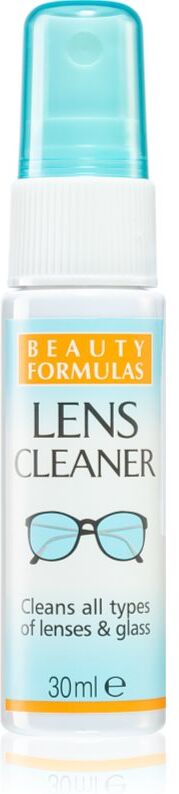
Beauty Formulas Lens Cleaning Spray nettoyant 30 mlBeauty Formulas Lens Cleaning, 30 ml, Accessoires mixte, Protégez votre peau du vieillissement prématuré et des autres dégradations causées par le soleil. La peau délicate du visage est beaucoup plus sensible que celle du reste du corps. En outre, elle est exposée aux rayons du soleil toute l'année. C'est pourquoi il est important de ne pas sous-estimer sa protection. Le produit de bronzage Beauty Formulas Lens Cleaning protège efficacement la peau de votre visage contre les rayons UV et vous aide ainsi à prévenir les coups de soleil ou l'apparition de taches pigmentaires et à diminuer l'élasticité de la peau, la perte de collagène et autres signes de l’âge. Mode d’emploi : Utilisez conformément aux instructions jointes.2,88 €*Shipping: 3,45 €Secure redirect to the provider
-
What is the difference between reflection and scattering?
Reflection occurs when light bounces off a surface at the same angle it hits it, resulting in a clear image. Scattering, on the other hand, occurs when light is dispersed in different directions by particles or irregularities in a medium, resulting in a diffuse or hazy appearance. In reflection, the light maintains its original intensity and color, while in scattering, the light may lose intensity and change color due to the interaction with the medium. **
-
What causes the photoelectric effect: absorption or scattering?
The photoelectric effect is caused by absorption of photons by electrons in a material, rather than scattering. When a photon with sufficient energy is absorbed by an electron in a material, it can transfer enough energy to the electron to liberate it from the material, causing the photoelectric effect. Scattering, on the other hand, involves the redirection of photons by particles in a material, but it does not result in the ejection of electrons from the material. **
-
Why is the Rutherford experiment called the scattering experiment?
The Rutherford experiment is called the scattering experiment because it involved firing alpha particles at a thin gold foil and observing how they scattered after hitting the foil. This scattering of alpha particles provided crucial evidence for the existence of a small, dense nucleus within the atom, as most of the alpha particles passed through the foil with little deflection, but a small fraction were scattered at large angles. This unexpected scattering pattern led to the development of the nuclear model of the atom and revolutionized our understanding of atomic structure. **
-
Can you explain the Rutherford scattering experiment atomic model?
The Rutherford scattering experiment was conducted by physicist Ernest Rutherford in 1909. In this experiment, Rutherford bombarded a thin gold foil with alpha particles and observed their scattering patterns. According to the prevailing atomic model at the time, the plum pudding model, it was expected that the alpha particles would pass through the foil with minimal deflection. However, Rutherford's observations showed that some alpha particles were deflected at large angles, and even some were reflected back. This led to the development of the nuclear model of the atom, in which the atom is mostly empty space with a small, dense nucleus at the center. This experiment provided evidence for the existence of a positively charged nucleus within the atom, leading to a significant shift in our understanding of atomic structure. **
* All prices are inclusive of VAT and, if applicable, plus shipping costs. The offer information is based on the details provided by the respective shop and is updated through automated processes. Real-time updates do not occur, so deviations can occur in individual cases. ** Note: Parts of this content were created by AI.